China's AI Transformation: Lessons from the World's Largest Innovation Laboratory
What can business leaders learn from the world’s largest innovation laboratory? During this year’s Executive Experience China study trip, participants explored how China is scaling AI across industries and transforming technological innovation into competitive advantage.
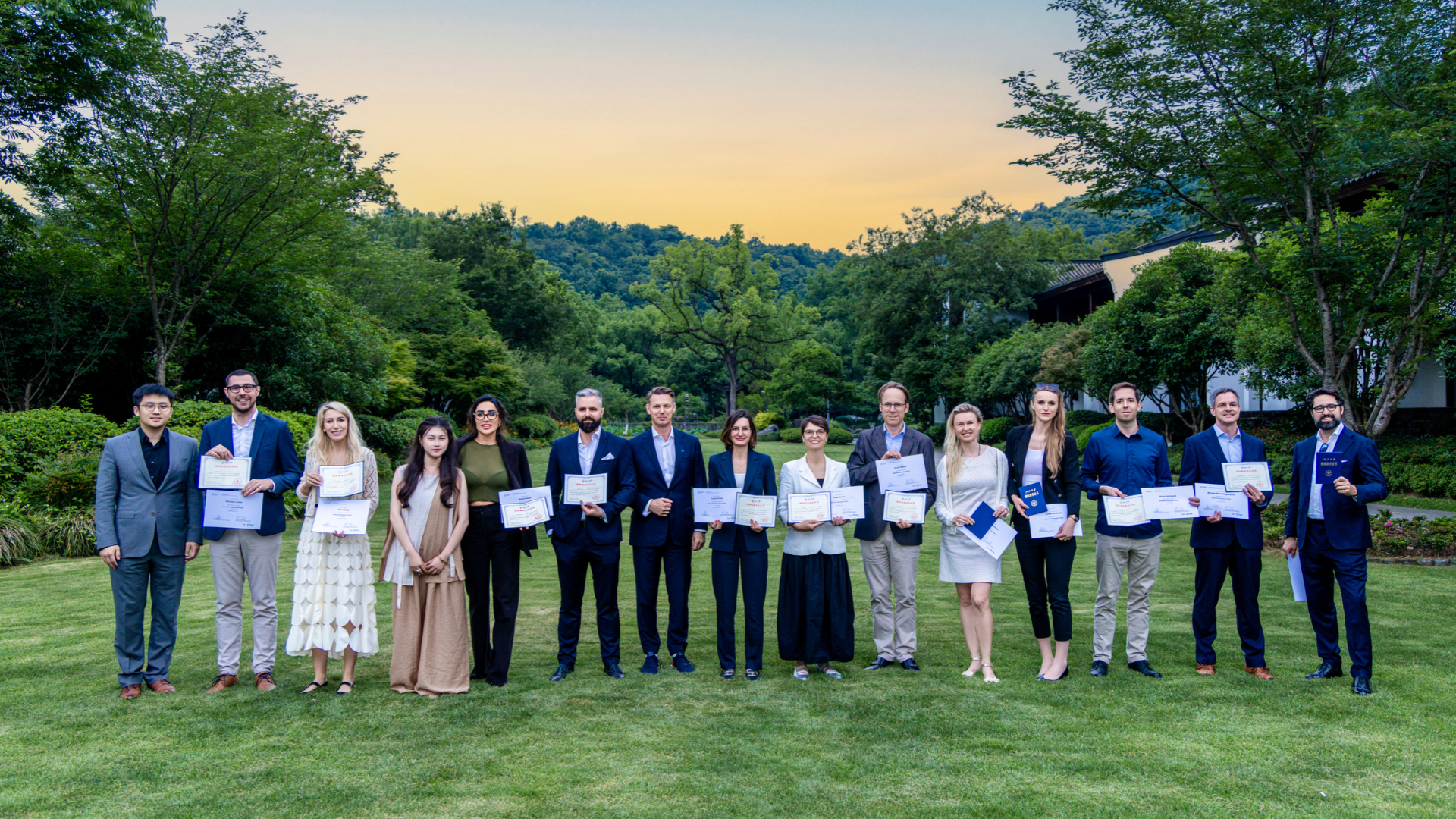
Understanding technological disruption requires more than reports, conferences, or headlines. It requires direct exposure to the environments where innovation is being developed, deployed, and scaled.
This year’s Executive Experience China study trip to Shanghai and Hangzhou brought together senior executives, entrepreneurs, board members, and CEOs to explore one of the world's most dynamic innovation ecosystems.
Technological leadership is increasingly determined not by innovation alone, but by real-world deployment and measurable business impact.
1. China 3.0: From sweatshop to innovation hub
A recurring theme throughout the trip was the distinction between invention and deployment. While many countries excel at developing new technologies, China's competitive advantage increasingly lies in its ability to commercialize and scale them rapidly.
This became particularly evident during our visit at Shanghai's Xuhui Innovation District, one of China's most ambitious AI and robotics clusters. At Deep Robotics, one of the so-called "Six Little Dragons" – a group of high-growth technology companies driving China's next wave of innovation, it became clear what fast innovation means. Founded by researchers from Zhejiang University, the company has grown from a university spin-off into a global robotics player within less than ten years.
The most memorable image was not a prototype in a laboratory, but a robot dog covered in dust from field operations. Deployed in power plants, tunnels, construction sites, and industrial environments, it continuously performs inspections, collects data, and identifies anomalies in locations where human access is difficult, dangerous, or inefficient.
The dusty machine symbolized a broader reality: technological leadership is increasingly determined not by technological sophistication alone, but by real-world deployment and measurable business impact.
Equally impressive were the two computer and robotics engineers who led the presentation. In their mid-twenties, they answered every question with remarkable technical depth, confidence, and professionalism, offering a glimpse into the talent that is driving China’s next generation of innovation.
As representatives from T Capital, a Beijing-based private equity firm, explained, Western commentators have predicted China's decline for decades. Yet the country has continued to deliver sustained economic growth, technological advancement, and industrial transformation, emerging as a global leader in fields ranging from advanced manufacturing to AI.
Since 2013, China's long-term planning approach and adaptive five-year strategies have helped position it as a global leader in innovation, speed of execution, and increasingly, technological competitiveness.
The AI race is not only about algorithms. It is about building the infrastructure required to support intelligence at scale.
2. The new gold rush: Investing in AI infrastructure
No exploration of China's digital economy would be complete without examining the companies enabling the AI revolution.
The current AI boom bears a striking resemblance to the California Gold Rush. While fortunes were made searching for gold, some of the most enduring winners were the businesses providing picks, shovels, railways, and infrastructure to the miners.
The same dynamic is emerging today. While attention focuses on AI applications and large language models, the real foundation of the AI economy lies in cloud computing, semiconductor manufacturing, data centers, networking infrastructure, cybersecurity, and sustainable energy systems.
Visits to Alibaba Cloud and Ant Group provided valuable insights into the scale of this infrastructure challenge. Every breakthrough AI model depends on vast computing power, sophisticated supply chains, reliable energy, and advanced connectivity. The AI race is therefore not only about algorithms – it is also about building the infrastructure required to support intelligence at scale.
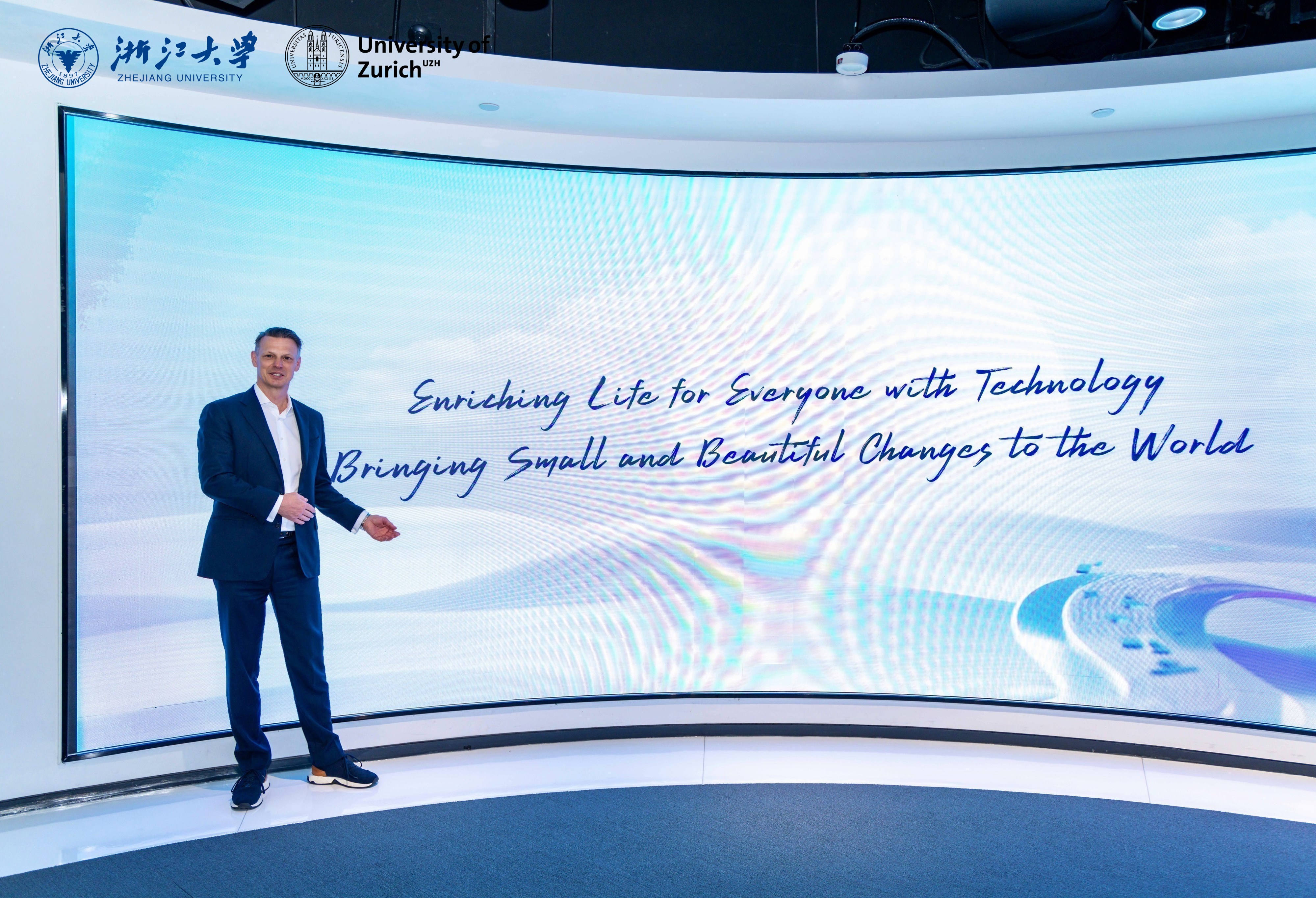
One particularly fascinating application was the emergence of AI-powered digital twin doctors provided by Ant Group’s digital health platform. Built on the expertise of leading medical specialists, AI agents can provide highly specialized health advice, triage patients, answer medical questions, and support clinical decision-making at scale. Rather than replacing physicians, they extend access to expertise and make specialized medical knowledge available anytime and anywhere.
Equally impressive was the seamless integration within Ant Group's broader ecosystem. Through Alipay, China's leading super app, users can manage healthcare appointments and consultations alongside everyday activities such as payments, taxi bookings, hotel reservations, restaurant recommendations, e-commerce purchases, and navigation. The result is a highly integrated digital experience that connects multiple aspects of daily life – from health to wealth.
3. The AI transformation
Healthcare offered one of the most compelling examples of AI’s transformative potential.
At WeDoctor, participants engaged in an open discussion with co-founder Dr. Zhang Qunhua about the evolution from an internet hospital to a comprehensive AI-powered healthcare ecosystem. Today, the platform connects more than 12,000 hospitals and serves hundreds of millions of patients through integrated digital services.
Rather than replacing physicians, AI is being deployed to support diagnostics, improve clinical decision-making, streamline operations, and expand access to healthcare. Millions of AI-assisted consultations demonstrate how technology can help address healthcare challenges at population scale.
A similar transformation is underway in manufacturing. During our visit to electric vehicle manufacturer Zeekr, participants witnessed how software, AI, automation, batteries, connectivity, and customer experience are converging into entirely new industrial business models. Take Zeekr's proprietary Golden Battery as an example. Built on an 800-volt architecture, this advanced lithium-iron-phosphate (LFP) battery can charge from 10% to 80% in just over 10 minutes – one of the fastest charging times in the industry. Equally impressive is the performance of the Zeekr 001 FR (Future Road), which accelerates from 0 to 100 km/h in approximately 2 seconds, placing it among the fastest production electric vehicles in the world. Together, these innovations demonstrate how China's EV manufacturers are pushing the boundaries of both battery technology and vehicle performance.
China's automotive manufacturers are increasingly viewed as a serious competitive threat by Germany's car industry. Their EV’s are rapidly evolving from engineered products into technology platforms, where software, AI, batteries, and digital ecosystems drive competitive advantage. This shift is likely to extend far beyond mobility and reshape many industries in the decade ahead.
4. From Smart Cities to intelligent cities
One of the most thought-provoking discussions took place in Hangzhou's City Brain initiative. For decades, cities competed by building roads, airports, industrial parks, and public services. In the digital era, a new layer is emerging: the ability to integrate data, coordinate resources, and make decisions in real time.
City Brain goes beyond traditional smart-city concepts. Rather than viewing urban systems as separate functions, it treats the city as an integrated digital ecosystem. Real-time data from transportation, public services, environmental monitoring, economic activity, and governance systems is combined to improve coordination and decision-making.
The broader lesson extends beyond urban planning. The future may belong to intelligent systems capable of continuously sensing, learning, predicting, and adapting.
The strategic question is no longer whether organizations should digitize. Most already are. The question is whether they can transform data into operational intelligence and competitive advantage.
The AI race is ultimately not about algorithms, data, or computing power. It is about people.
5. The talent race
Technology alone does not create innovation ecosystems. Talent does. This became particularly evident during discussions with professors at Zhejiang University, one of China's leading academic institutions. Alongside investments in AI infrastructure and industrial capabilities, China is investing heavily in STEM education, research excellence, and entrepreneurial development.
Recent reforms reportedly include the elimination of thousands of university degree programs considered outdated while expanding AI, engineering, and technology-related disciplines. The objective is clear: align education with the future demands of the economy. The AI race is ultimately not about algorithms, data, or computing power alone. It is about people.
Nations and organizations that successfully develop the next generation of engineers, scientists, entrepreneurs, and technology leaders will be best positioned to capture the economic opportunities created by AI.
6. Key takeaways
The most important lesson from Shanghai and Hangzhou was not a particular technology, company, or application. It was the realization that China is increasingly approaching AI as a national capability rather than a standalone technology.
Across healthcare, manufacturing, finance, urban governance, and education, the focus is not on isolated pilot projects but on deployment at scale. Success is measured not by technological novelty, but by adoption, integration, and economic impact.
For executives, the challenge is no longer understanding what AI can do. The challenge is determining how quickly their organizations can adapt to compete in an AI-enabled economy.
Key takeaways:
- AI is becoming critical infrastructure
- Speed of execution creates competitive advantage
- Talent determines long-term competitiveness
- Industries are evolving into technology businesses
The ultimate purpose of executive education is not simply to study the future, but to recognize when it is already unfolding and to act accordingly.
Text: Dr. Daniel Fasnacht
7. Future outlook
The next Executive Experience China study trip is planned for June 2027.
The program offers senior executives firsthand access to China's innovation ecosystems, digital transformation hubs, leading universities, and world-class technology companies. Please find more information here.
If you are interested in joining a curated delegation of business leaders, we invite you to register your interest.
For more information, please contact:
Dr. Daniel Fasnacht
daniel.fasnacht@execed.uzh.ch