AI Triage: The challenge is no longer accessing AI. It is making the right trade-offs.
The AI Panel at the University of Zurich explored how leaders can create value with AI while navigating complexity, responsibility and rapid technological change.
AI is becoming easier to access, more powerful and increasingly embedded in everyday business. Yet that does not necessarily make the choices facing leaders easier. Quite the opposite. As AI moves from chatbots to systems connected to company data and increasingly towards AI agents capable of taking actions, organizations must make decisions about technology, value, skills, risk and responsibility simultaneously.
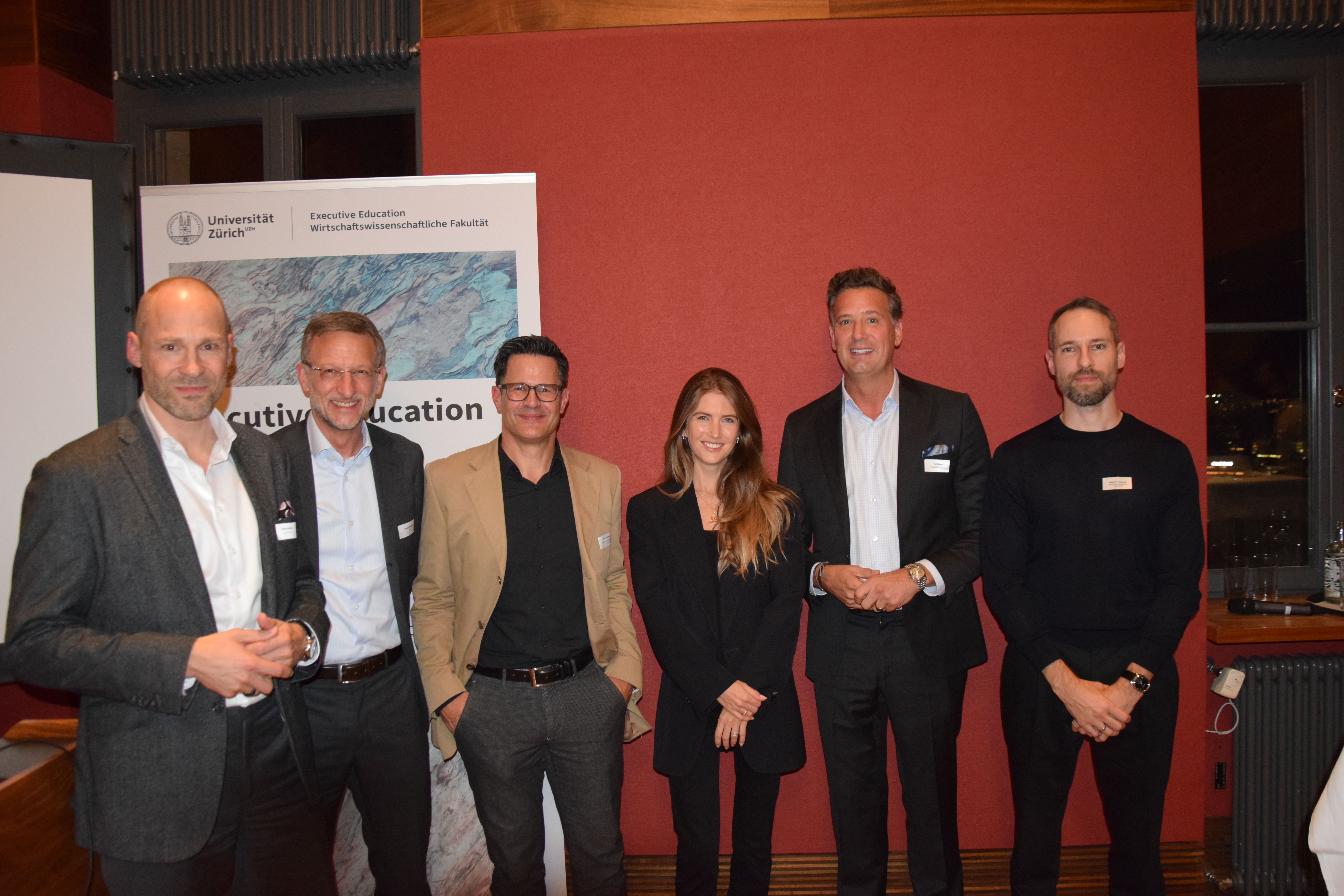
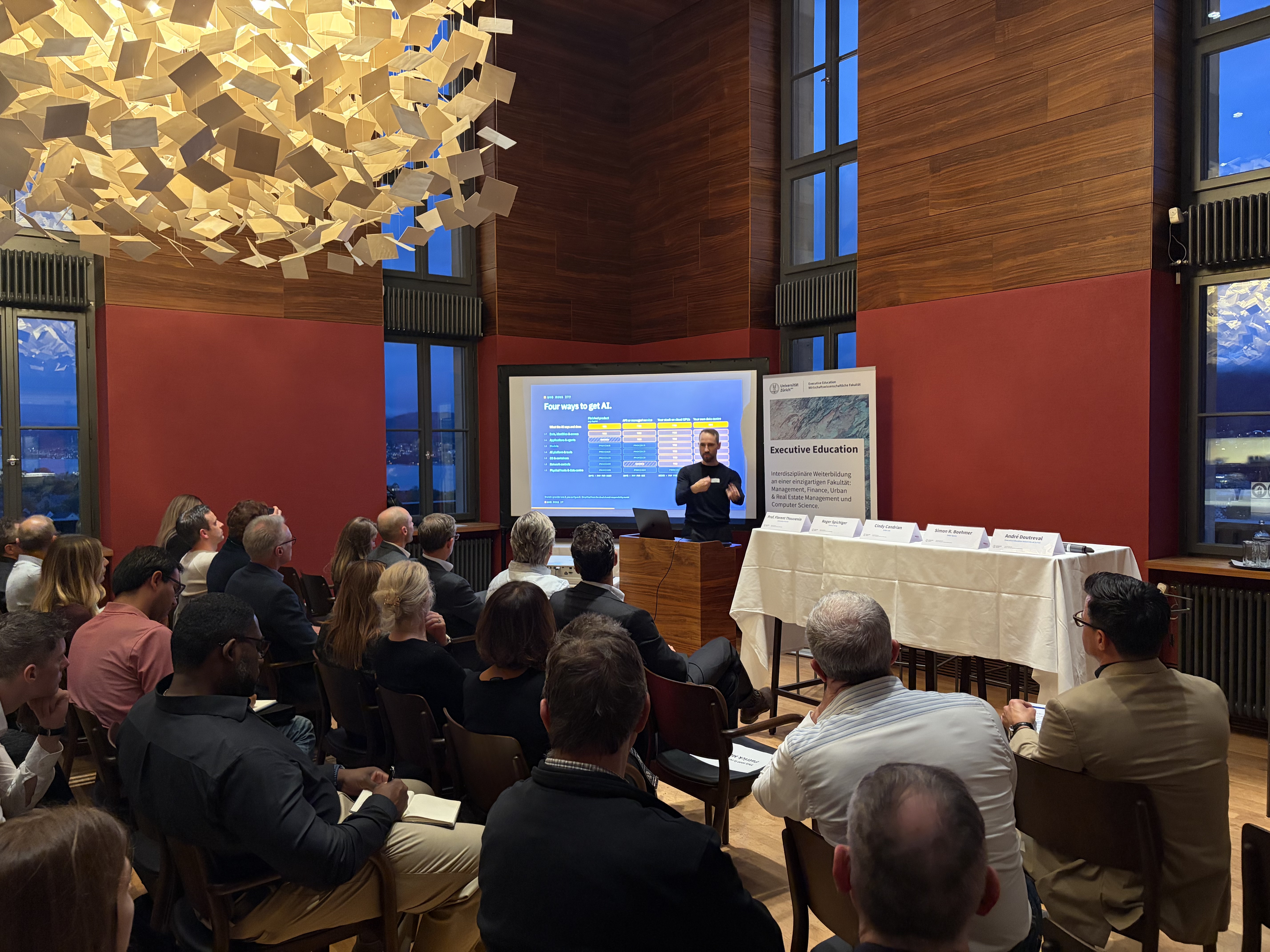
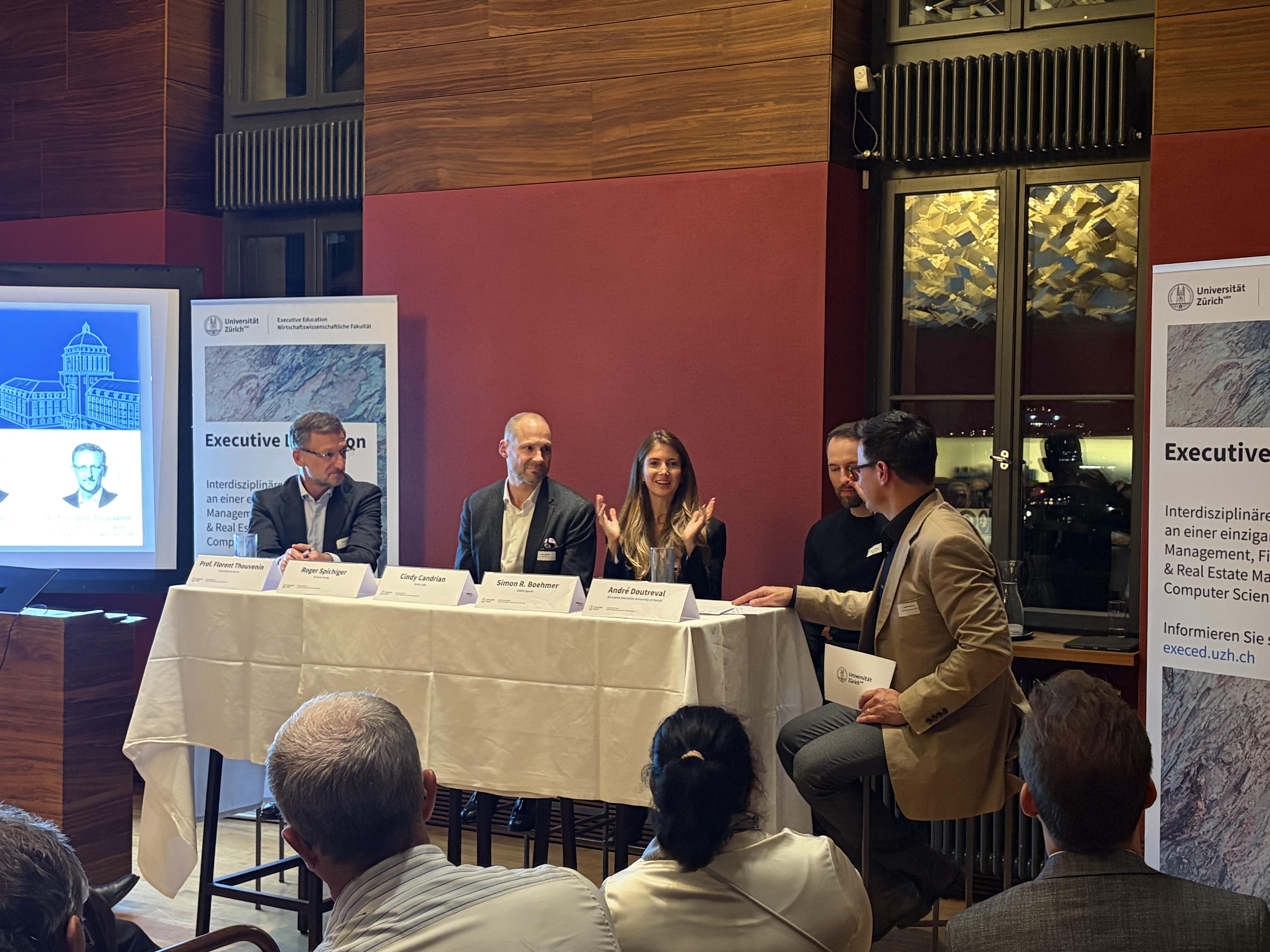
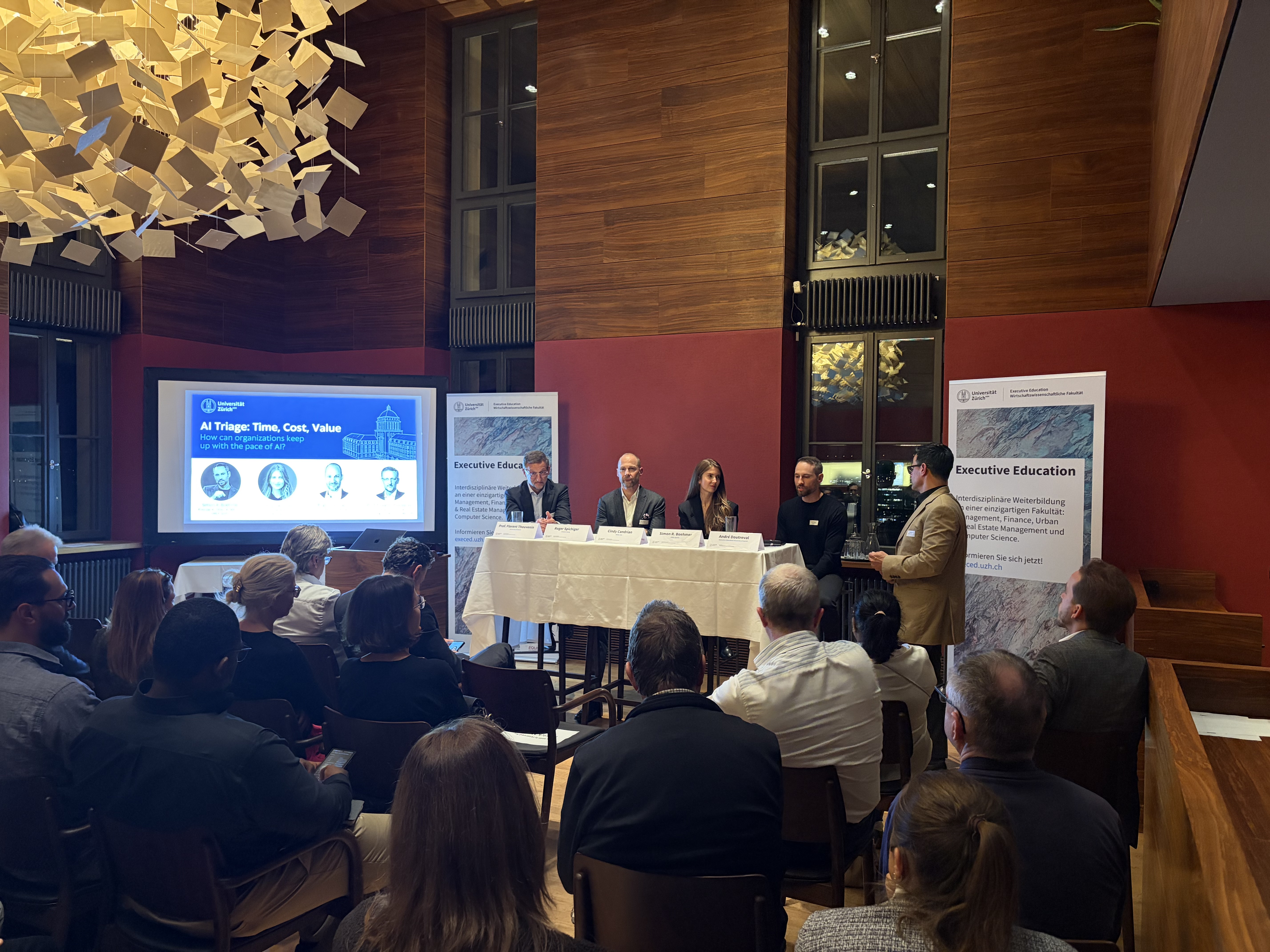
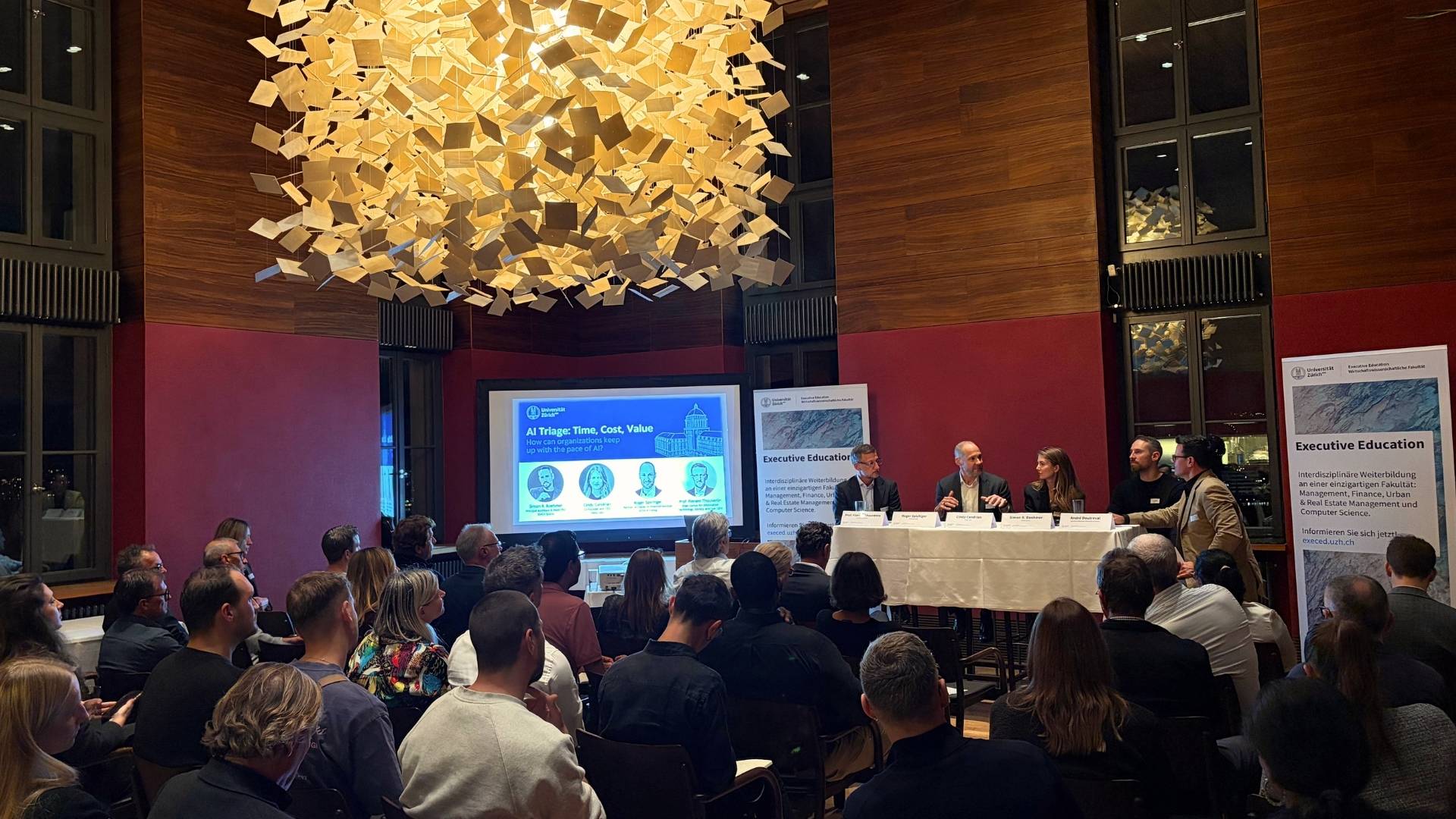
That was at the heart of a recent discussion at the University of Zurich, bringing together perspectives from technology, business transformation, entrepreneurship and law. The discussion was enriched by the expertise and perspectives of Prof. Florent Thouvenin (University of Zurich), Simon R. Boehmer (Alibaba Cloud), Cindy Candrian (Delta Labs) and Roger Spichiger (EY), who contributed insights from academia, technology, business transformation and entrepreneurship.
The event was co-hosted by Executive Education UZH with André Doutreval as moderator, and Olaf Zilkens from Alibaba Cloud.
One concept captured the challenge particularly well: AI Triage. Not every business problem needs the most powerful model. Not every technically feasible AI application creates value. And not every risk can be outsourced to a technology provider. AI Triage therefore means asking: Where should we use AI, what level of capability do we actually need, what value should it create and what responsibility comes with that decision?
Three themes emerged.
1 | KEEP UP
AI is becoming easier to use. Understanding it is becoming more important.
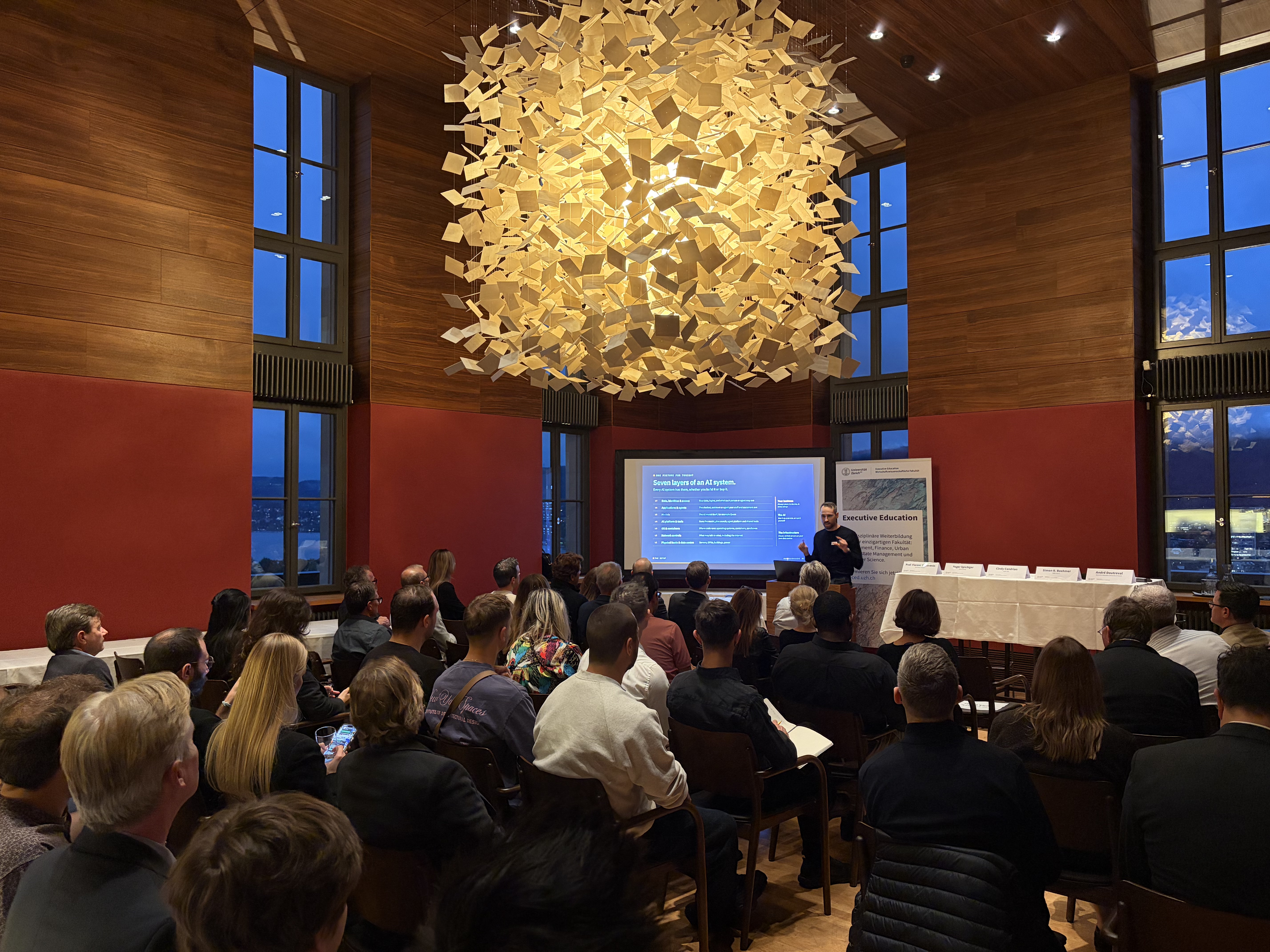
A few years ago, advanced AI capabilities were largely the preserve of technology specialists. Today, organisations can access powerful AI through ready-made software, APIs and cloud platforms. But accessibility creates a new problem. When technology is easy to buy, organisations can quickly accumulate tools without developing a corresponding ability to use them effectively. And underneath a seemingly simple AI interface sits a much broader system involving data, applications, models, platforms, infrastructure, security and governance.
So does easier AI mean organisations need less internal expertise? The panel's answer was essentially the reverse. They need more understanding, not necessarily more technologists. Leaders need enough AI literacy to understand what they are choosing, what consequences those choices create and which capabilities genuinely belong inside their organisation.
Because technology can be purchased. Understanding cannot simply be outsourced.
2 | CREATE VALUE
Don't start with AI. Start with the problem.
For several years, experimentation was itself valuable. Organisations needed to discover what generative AI could do. That phase is changing. Management increasingly needs to ask the same demanding questions of AI that it would ask of any major business initiative:
- Which problem are we solving?
- What outcome should AI improve?
- How will we measure success?
- And is the improvement worth the cost and risk?
AI might automate an existing process. But applying AI to a poor process may simply produce a faster poor process. The more interesting question is whether AI allows the process itself to be reimagined. That means looking beyond efficiency:
- Can AI support better decisions?
- Can it change how customers are served?
- Can it enable a service that previously was not economically possible?
- Can it create new sources of value?
This requires moving from “Where can we add AI?” towards: “What are we trying to achieve, and what combination of people, process and technology gives us the best result?”
Sometimes that will require a sophisticated AI solution. Sometimes a smaller and less expensive system will do the job better.
3 | ACT RESPONSIBLY
The more AI can do, the more important the system around it becomes.
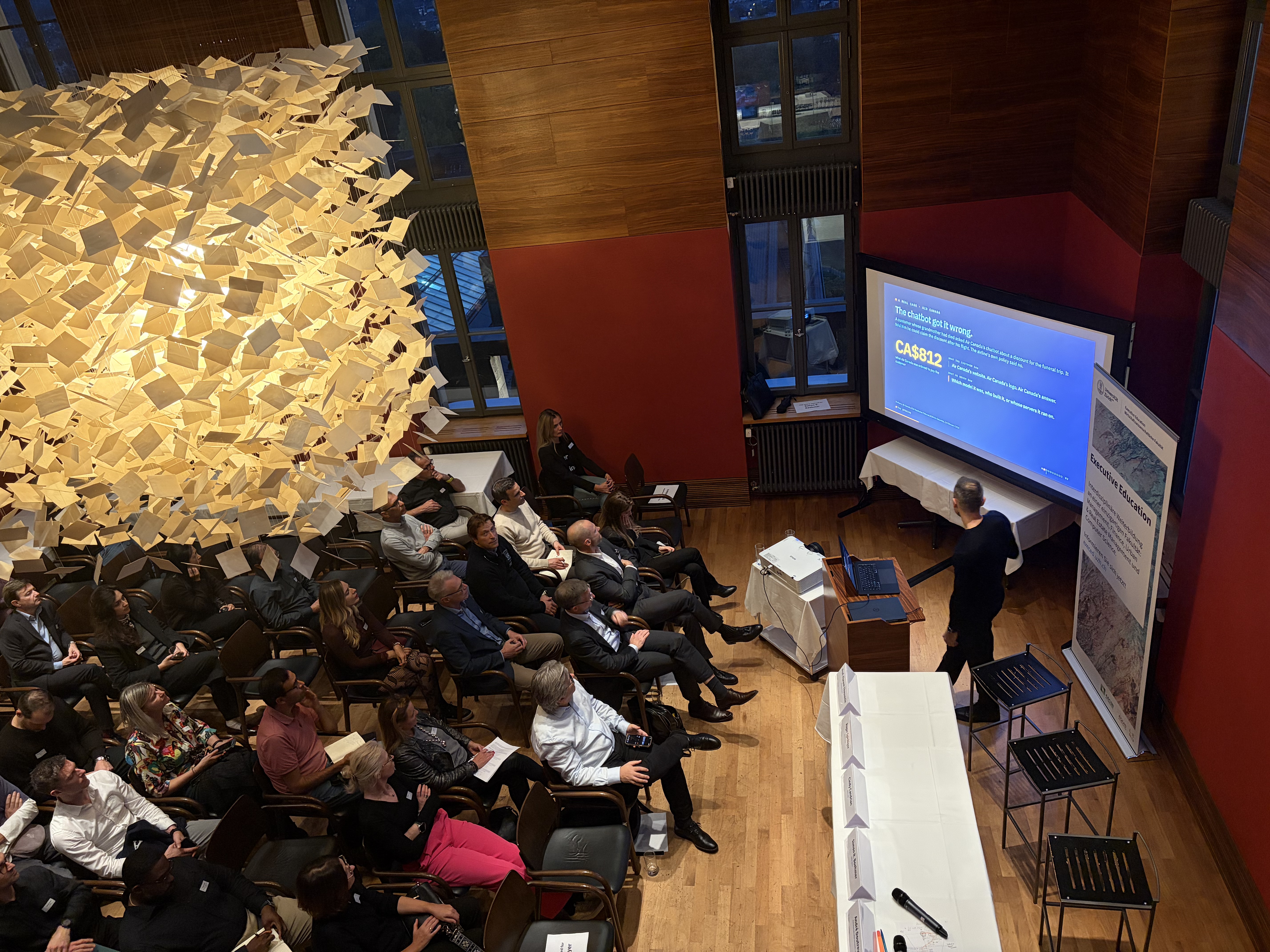
A chatbot giving an incorrect answer is one problem. An AI system accessing confidential information is another. An AI agent capable of executing actions creates another level of consequence again.
As systems become more capable and autonomous, the potential value increases. But so does the impact of mistakes. The evening's technology and legal perspectives converged on one important point: Responsibility does not disappear because AI made the decision.
From a customer's perspective, an AI service offered by a company remains part of that company's interaction with the customer. This is why responsible AI is about much more than a policy document. It includes architecture, access rights, data governance, testing, monitoring, logging, security and clear organisational responsibility.
The interesting conclusion is that governance and innovation are not necessarily opposites.
Good governance can provide the confidence organizations need to move faster.
From experimentation to continuous learning
One of the most revealing discussions of the evening concerned failure. AI does not behave like conventional technology development. Capabilities can change quickly. Models improve, are updated or disappear. Applications that are infeasible today may suddenly become possible. Systems that work today need to continue being tested tomorrow.
The organizations making progress therefore appear less concerned with achieving perfection at the first attempt and more capable of: trying → measuring → learning → adapting → scaling.
That is not an argument for uncontrolled experimentation. It is an argument for disciplined learning.
And it changes what organisations need from their people.
The skills question may be the biggest AI question
If AI can increasingly produce analyses, code, presentations and written content, what becomes more valuable for humans? One answer from the discussion was striking: knowing what questions to ask.
Critical thinking. Domain expertise. Judgement. Understanding how processes fit together. Assessing whether an AI-generated result makes sense. Recognising where technology adds value and where human intervention remains essential.
AI therefore doesn't make learning less important. It makes continuous learning more important. For leaders, the objective is not to understand every new model or become an AI engineer. It is to develop enough understanding to ask better questions and make better decisions about technology, people, processes, value and risk.
And for experts, the challenge is similar: technical capabilities increasingly need to be connected to business understanding and responsible implementation.
AI Triage: four questions for every leader
Before launching the next AI initiative, we suggest starting with four questions:
1. PROBLEM
What business or customer problem are we actually trying to solve?
2. VALUE
What measurable difference should AI make?
3. CAPABILITY
What level of AI capability and autonomy do we genuinely need?
4. RESPONSIBILITY
What happens when the system gets something wrong, and who is accountable?
That is the essence of AI Triage. Not AI for its own sake. But applying the right AI, to the right problem, at the right level of complexity and with the right level of responsibility.
The next competitive advantage: the ability to learn
AI technology will continue to move. For organisations, trying to reach a final state of “AI readiness” may therefore be the wrong objective. The more sustainable ambition is to build an organisation capable of continually becoming AI-ready again.
That requires leaders who can connect technology with strategy. Professionals who can rethink processes rather than merely automate them. And organisations that can experiment responsibly, learn rapidly and translate new capabilities into measurable value.
This is also why continuous executive education matters. Because the crucial question is becoming less: “What can AI do?” and increasingly: “What should we do with it?”
And answering that question requires something technology itself cannot replace: informed judgement.