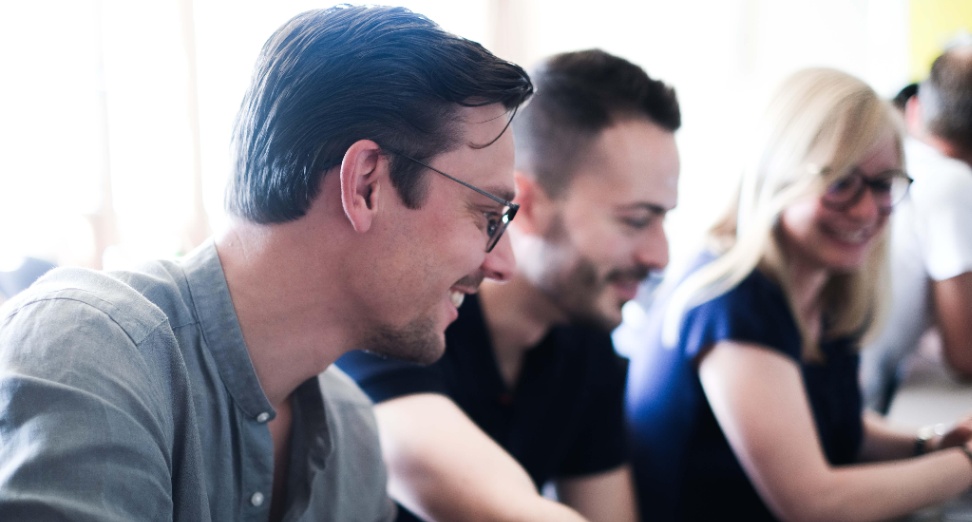
Matthias Truninger-Riklin, MAS Sustainable Finance

Matthias Truninger-Riklin is the first graduate of the MAS Sustainable Finance. He is 38 years old, lives with his family in Zurich and works as Head of Business and Sales Management at Aargauische Kantonalbank. Prior to that, he held various positions at UBS. His plan to take a break from his career to complete the MAS as a full-time course of study in one year only worked out to a limited extent. After only half a year, he was drawn back to the working world, and so he completed the second half of the program part-time - a time challenge that he mastered successfully.
When did you get the idea to pursue further education?
I completed my last degree in 2010. The need to update my financial knowledge and learn new, relevant skills grew over the last few years. In doing so, I didn't want to reorient myself, but rather build on the knowledge I had acquired over the years. Sustainable Finance is a buzzword these days, with a lot of half-knowledge and sometimes misconceptions. I was attracted by the idea of gaining a sound understanding of this new discipline with its various facets. So when I saw the new course at the University of Zurich advertised, it was an easy decision for me to sign up for the MAS Sustainable Finance.
When did you notice that sustainability was becoming an issue in the financial sector?
The issue really came to the fore in the last 5 to 6 years, with the introduction of the Sustainable Development Goals. UBS, my former employer, played a pioneering role in this area. In many places, the topic was not taken seriously at the beginning. However, a change has now taken place - from a compulsory exercise for many companies and banks to a deep conviction. I personally felt the same way. At the beginning, I was not fully aware of the urgency of the issue. Thanks to my studies, however, I now have a much better understanding of the whole situation.
What did you particularly like about the programme?
I found the modular approach ideal, which allowed me to focus on the topic of Sustainable Finance and at the same time cover other topics that I also found exciting. In this way, the content of the program can be adapted to personal interests. In addition, this modularity allows a great deal of flexibility in terms of time. Only in this way was it possible for me to condense my studies and complete them in one year - in addition to my family commitments and, in the second half of the year, also in addition to my new job. Moreover, I was able to meet and exchange ideas with many interesting people from different areas and companies, which is also an advantage of the modularity. I also particularly liked the competent lecturers from research and practice. On the one hand, there were renowned professors from the University of Zurich who gave us an insight into their research. On the other hand, there were counterparts from practice who always facilitated exciting discussions among the participants. I consider this combination of the university's theoretical foundation and the practical application to be valuable.
What was the biggest challenge?
One challenge was the time aspect. Each module requires time for preparation, implementation and follow-up. At the beginning, it was not so easy to estimate the time required for the individual modules.
What are your key takeaways from the MAS Sustainable Finance?
My first takeaway is the personal awareness and deep conviction that we have a responsibility. It is tempting to say that Switzerland is not a big emitter of greenhouse gases because we are, proportionally, only a small number of people. But the understanding that this is only half the truth is something I gained through this continuing education. In Switzerland, we consume and import an enormous amount. We are also responsible for the current situation, not just big producing countries like China or India. From the bank's perspective, it is clear that its own actions can be a model for other companies, but that the big leverage is clearly with the customers. As a bank, it is therefore important to convince customers to initiate the transition in their business areas and to support them in doing so. The great potential of financial institutions lies in helping to support companies on their way to a sustainable economy through the allocation of resources. In the end, it is the real economy that will make the difference, not the banks. The second takeaway is this: I strongly believe that there is a need for global solutions on the sustainability issue. There are many stakeholders in the whole issue who are striving to bring about positive change. But these efforts need to be consolidated. The individual small, local patches do nothing; a binding, global agenda is needed.
Was there anything that surprised you during the programme?
The extent and complexity of the topic surprised me. There are so many areas that play into the overarching topic of Sustainable Finance, and each in itself is almost endless. The deeper you dive into each topic, the more complex it becomes. This is probably also why so little change happens at first, as people freeze and resign themselves to complexity.
Is there a topic in Sustainable Finance in which you could acquire even more knowledge?
Yes, certainly, in almost every one. I wouldn't presume to be an expert in any of these topics. But the MAS provides a broad and very good overview of the subject. Of course, there was not enough time in the continuing education program to go into all the sub-topics in detail. But the question is, is that even necessary? I find it dangerous to have a superficial half-knowledge or to be too deep in the details and only have an isolated way of looking at things. In order to bring the big picture forward, it is optimal to have a broad knowledge. I was able to acquire this thanks to the training.
Are there challenges in your job that you can tackle directly with the help of the newly acquired knowledge?
Yes, I am already benefiting greatly from this further training. For example, there are two important Swiss Banking guidelines that come into force on January 1, 2024. One in the investment area, which says that you have to pick up ESG preferences from the investor. The other in lending, which requires that owners of single-family homes be educated and advised on energy efficiency. These are two concrete topics that are being implemented at our bank and in which I can now play an active role.
Would you recommend the MAS Sustainable Finance and if so, to whom?
Yes, I would definitely recommend the course. There is a great need for well-trained specialists and accordingly there are many exciting opportunities on the job market. The MAS is suitable for people who are interested in sustainability and financial topics and would like to acquire sound knowledge in this area.
Thank you very much, Matthias Truninger-Riklin!
(Click here for more information on the MAS Sustainable Finance.)
Text: Linda Betschart