Stefan Bertschi, DAS in General Management
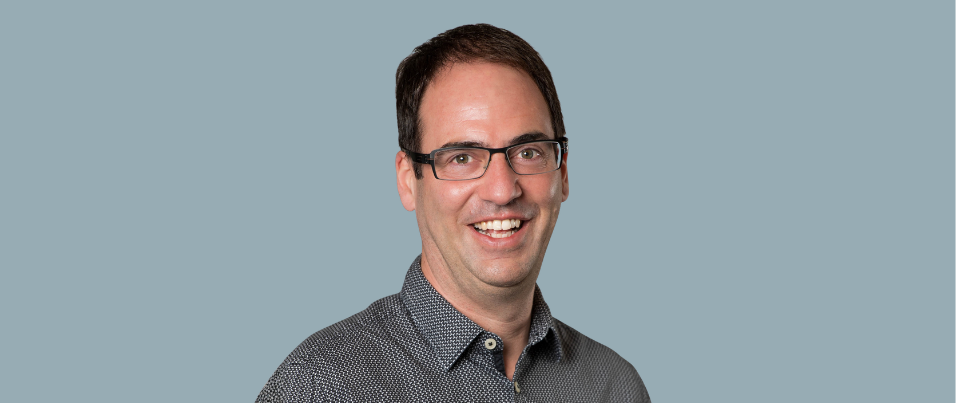
Stefan Bertschi lives in the Zurich Oberland and looks back on an unconventional career path. After completing an apprenticeship as a radio and television electrician, his journey took him through the aviation industry and a leadership role in an SME before joining ETH Zurich. There, he headed the Electronics and IT Laboratory of the Autonomous Systems Lab for ten years. Since 2015, he has played a key role in building up Wyss Zurich. Today, he serves as Head of the Biomedical and Robotics Technologies Platform at Wyss Zurich, supporting research teams on their journey from scientific innovation to entrepreneurial venture.
What he particularly enjoys about his role is the interplay between technology, people, and entrepreneurship: «I work with teams that want to turn a research idea into a company. Acting as a bridge between science and business means that no two days are the same, and that’s exactly what makes the work so exciting.»
To strengthen the theoretical foundations of his leadership experience and gain new perspectives on strategic decision-making, finance, and organizational development, he enrolled in the DAS in General Management (in German) at the Executive Education of the Faculty of Business, Economics and Informatics at the University of Zurich.
Beyond his professional responsibilities, Stefan has been actively involved in promoting young talent for many years. He is a co-founder of the non-profit initiative mint & pepper at ETH Zurich and a co-initiator of Startbahn 29 at the Innovation Park Dübendorf. In his free time, he enjoys spending time in the mountains, paragliding, and working in his garden.
What motivated you to explore the topic of general management in greater depth?
My background is in engineering, and I gradually grew into leadership responsibilities over the course of my career. While I had always been interested in business and management-related topics, they never came naturally to me. I started with an apprenticeship and built my knowledge through continuous professional development and hands-on experience.
As I took on responsibility for leading the platform and overseeing talent development initiatives, including securing and managing their funding, gaining a deeper understanding of general management became increasingly important. A number of shorter courses had already sparked my interest. At some point, however, I wanted more than a general understanding. I wanted a solid, well-founded grasp of the subject.
In many situations, I made the right decisions intuitively, but I could not always explain the underlying rationale. I wanted to close that gap.
Was there a specific situation or challenge that prompted this step?
Not a single event, but rather a realization that developed over many years. Throughout my career, I was consistently challenged and learned a great deal, particularly through working with start-ups, managing budgets, and engaging with funding partners. In many situations, I made the right decisions intuitively, but I could not always explain the underlying rationale. I wanted to close that gap. To be honest, at the age of 50, I also asked myself whether investing in a program like this was still worthwhile. Looking back, I would say: that is precisely when it is most valuable.
What factors influenced your decision to choose the DAS in General Management offered by UZH Executive Education?
There were several reasons. First, Wyss Zurich is a joint initiative of ETH Zurich and the University of Zurich. While I am employed by ETH Zurich, my work at Wyss Zurich has also brought me much closer to the University of Zurich.
Another important factor was the strong reputation of the Executive Education program offered by the Faculty of Business, Economics and Informatics, along with the assurance that the curriculum would be academically rigorous and grounded in sound research.
Finally, the program’s proximity to my workplace, combined with its modular structure and wide range of elective modules, allowed me to tailor the learning experience to my personal and professional needs.
What made this program stand out for you compared to other offerings?
Three things: the lecturers, the flexibility, and the convenience of the location.
The lecturers combine academic depth with extensive practical experience, which made the content both rigorous and highly relevant. I particularly appreciated learning from experts who could bridge theory and real-world application. The flexibility was another key factor. Because I was able to choose and combine the elective modules myself, it was possible to fit the program around a demanding full-time role. Without that modular structure, I probably would not have enrolled in the first place. And finally, the proximity to my workplace made attending classes much easier and helped me integrate the program into my professional routine.
The concept that had the greatest impact on me was organizational ambidexterity: the ability to reliably manage and optimize existing operations while simultaneously creating space for innovation and new opportunities.
Has there been a key insight or mindset from the DAS that has fundamentally changed the way you think about leadership and management?
Yes, although it did not replace my experience. Rather, it helped me make sense of it. The concept that had the greatest impact on me was organizational ambidexterity: the ability to reliably manage and optimize existing operations while simultaneously creating space for innovation and new opportunities.
In my professional environment, this is part of everyday life. We operate between research projects with long-term horizons and spin-offs that are expected to deliver results tomorrow. I had always tried to balance these competing demands, but I never had a clear term for what I was doing. Discovering that there is a well-established theoretical framework behind this approach was both enlightening and reassuring. It validated many of the decisions and leadership practices I had developed through experience and gave me a stronger foundation for understanding and applying them.
How has your perspective on managing organizations or complex units as a whole changed?
Today, I think much more in terms of systems rather than isolated measures. In the past, I tended to view strategy, finance, people management, and communication as related but largely separate topics. Now, I see how closely interconnected they are and how decisions in one area inevitably affect the others.
This broader perspective has made me more patient when analyzing challenges and more decisive when it comes to implementation. I spend more time understanding the underlying dynamics of a situation, but once I have a clear picture, I am more confident in taking action.
Another important shift is that I consciously try to view issues from the perspective of the organization as a whole, even when I am only responsible for a specific part of it. That systems-level perspective has become an essential part of how I approach leadership today.
I have come to believe that a thoughtful approach to data and a willingness to continuously learn are essential requirements for anyone in a leadership role.
Which course content or topics had the greatest impact on you, and why?
The Leadership module (in German) was where I first gained a systematic understanding of how my own leadership style works and where its limits lie. I learned that as responsibilities increase, a leader’s impact depends less on technical expertise and more on clarity, consistency, and reliability. Today, I have a much better understanding of why I react the way I do in certain situations, which allows me to lead more consciously rather than simply responding instinctively. Earlier in my career, I was the person who always had the technical answer. Today, I tend to hold back longer in discussions, ask more questions, and allow the team to arrive at solutions themselves. That does not always come naturally to me, but it generally leads to more sustainable and widely supported outcomes.
Through the Leadership Communication module (in German), I learned to explain the why before the what more consistently and to communicate messages more simply and clearly. I also try to create more space for dissenting opinions and constructive disagreement, even though I cannot claim to get it right in every meeting.
The two technology-focused modules, Digital Transformation and AI for Business (in German), were among the most exciting for me. They helped me build an important bridge between two worlds. The technology side was already familiar from my professional background. What was new was learning to think about technology consistently in terms of business models, processes, and organizational structures. As an engineer, my first question about a new technology used to be: How does it work? Today, my first question is: Which processes and roles will it change? The program helped me realize that the technology itself is often not the main bottleneck. More critical factors are usually the organization, the available skills, the quality of the data, and clearly defined responsibilities. When it comes to artificial intelligence, I particularly appreciated the balanced and pragmatic perspective. Rather than viewing AI as either a miracle solution or a threat, I now see it as a tool whose capabilities and limitations need to be understood. This has changed the way I evaluate AI-related projects. Today, I ask about data quality, ownership, governance, and business value early on, and only later about the model itself. More broadly, I have come to believe that a thoughtful approach to data and a willingness to continuously learn are essential requirements for anyone in a leadership role.
The module I found most challenging was Finance for Managers (in German), and perhaps because of that, it was also one of the most rewarding. The logic behind financial statements and income statements was less intuitive to me than I had expected, and I had to invest considerably more time than in other modules. Looking back, however, that effort paid off, as it gave me a much stronger understanding of the financial dimension of organizational decision-making.
Is there a model, framework, or approach from the program that you still use regularly today?
The concept of organizational ambidexterity is something I apply almost every day, as is the understanding I gained of my own leadership style. It is less a tool and more a lens through which I view and interpret situations differently.
And to be honest, there are also models from the program that I have never used since completing it. I think that is perfectly normal. You cannot know in advance which concepts will truly resonate and stay with you. Some ideas prove immediately relevant, while others serve more as background knowledge. The value lies in being exposed to different ways of thinking and discovering which ones become part of your own practice over time.
Which topics or approaches do you believe will stay with you in the long term?
The concept of organizational ambidexterity and the question of how innovation can be enabled within established structures will continue to shape my thinking. It is a challenge I encounter regularly in my professional environment and one that I expect to remain highly relevant in the years ahead.
I am also particularly interested in the intersection of technology and organization, especially the impact of artificial intelligence on the way we work, the roles we perform, and the skills we will need in the future. What strikes me is how constant some of the most important capabilities remain, despite rapid technological change: the ability to think analytically and the willingness to keep learning. These are qualities I actively encourage within my own team and seek to foster as early as possible through my involvement in talent development initiatives. Another topic that will continue to accompany me is the conscious management of risk.
Can you give a concrete example of how you applied what you learned within your organization or area of responsibility? What changes or results have you observed as a result?
One example is the way we prioritize projects within my platform. We support several projects simultaneously, while resources such as people, infrastructure, and time are limited. In the past, we often prioritized based on urgency. The project team with the most pressing request typically received support first. Today, we evaluate projects against a set of clearly defined criteria and make the rationale behind our prioritization transparent. This creates a shared understanding of why certain initiatives take precedence over others. I cannot substantiate with hard data that this approach has made us measurably more effective. What I have noticed, however, is that I rarely have to justify decisions after the fact. The important discussions now take place upfront, where priorities are established, rather than later, when decisions are questioned. Another change is that I frame my arguments much more in terms of impact and strategic relevance than purely technical considerations.
Do you make strategic or operational decisions differently today than you did before the DAS? If so, how?
Yes, I make a much clearer distinction between the two. When it comes to operational matters, I tend to make decisions more quickly and delegate more consistently. Strategic decisions, on the other hand, require a different approach. Today, I take more time, challenge my assumptions, and first clarify what a decision is actually intended to achieve before evaluating the available options. I also think in longer time horizons than I used to. Rather than focusing primarily on the immediate outcome, I ask myself what a decision will mean in two or three years' time, both from a people and a financial perspective.
Today, I see uncertainty less as a disruption and more as a normal condition of leadership and management.
How has the DAS influenced the way you deal with uncertainty, complexity, and change?
The theoretical foundations I gained through the program significantly improved my understanding of what is happening around me and helped me identify where and how to intervene most effectively. Today, I see uncertainty less as a disruption and more as a normal condition of leadership and management. In complex environments, complete information is rarely available, yet decisions still need to be made. Accepting that reality has changed the way I approach challenges.
Do you feel better equipped to lead transformations today? If so, how does that show in practice?
Yes. I approach change in a more structured way today. I focus on the aspects that are within my sphere of influence and am better at distinguishing them from those that are outside my control. In practical terms, I notice this in the way I handle unclear or uncertain situations. I tend to initiate conversations earlier and define intermediate milestones rather than promising a fully defined end state from the outset.
How will what you learned influence your future decisions, projects, or strategic direction?
I now have a more holistic understanding of the different levels of leadership and work with clearer structures. This influences how I design and prioritize projects, as well as how I engage with boards, committees, and external partners. Perhaps most importantly, the program has given me the confidence to tackle topics that extend beyond my technical area of expertise. In the past, that was often a barrier for me.
How has the exchange with other participants influenced your perspective on leadership and management?
The diversity of personalities and professional backgrounds among the participants was, for me, one of the greatest additional benefits of the program. In my professional life, I am usually surrounded by people with fairly similar profiles. Here, however, I found myself learning alongside individuals whose day-to-day realities were very different from my own. What I found particularly striking was that the same leadership challenge can require entirely different solutions depending on whether it arises in an industrial company, a public administration, or a start-up. That experience has made me more cautious about one-size-fits-all approaches and universal leadership recipes. The program also led to friendships that would never have emerged otherwise.
What was the biggest challenge of the program, and what did you learn from it?
The biggest challenge was completing the program within a single year, a goal I had set for myself. It was certainly achievable, but it required careful planning and a considerable degree of flexibility. Looking back, I would probably pay more attention to the sequencing of the modules and allow a little more time between certain phases of the program. This experience has also influenced the way I approach projects today. Ambitious goals are achievable, but they require thoughtful pacing, realistic planning, and sufficient room to adapt when circumstances change.
Who would you say benefits most from the DAS in General Management, and why?
In my view, the program is particularly valuable for people who already have leadership experience and want to understand why things work, not just that they work. For me, this was actually the ideal stage of my career to undertake a program like this. By that point, I could immediately relate almost every model or framework to situations I had encountered in practice. The academic concepts gave structure and explanation to experiences I had already lived through. Those who are primarily interested in obtaining a qualification or who are not willing to critically reflect on their own behavior may not get as much value from the program. A significant part of the learning comes from examining your own assumptions, decisions, and leadership style. In my experience, that is where much of the real benefit lies, and it is something that cannot be delegated to anyone else.
Would you choose the program again?
Absolutely. The clearest confirmation is that next year I will be taking the next step and expanding my DAS into a MAS in General Management (in German) at the Executive Education of the Faculty of Business, Economics and Informatics at the University of Zurich. For me, that decision speaks for itself.
Thank you very much, Stefan Bertschi!
Learn more about the DAS in General Management here.